15 Proven Ways to Prepare for a Job Interview
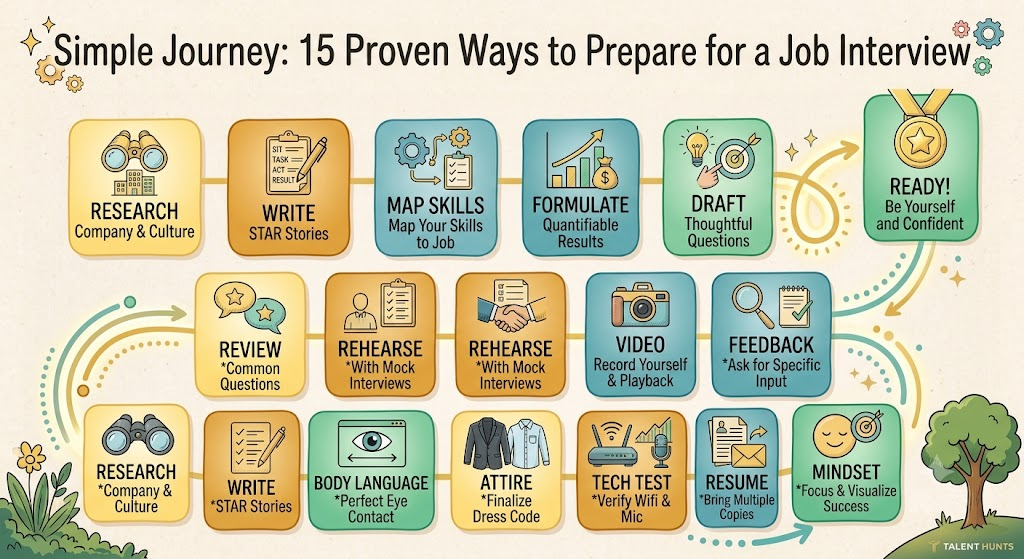
1. Research the Company Beyond Its Website
Walking into an interview without understanding the company is one of the fastest ways to lose credibility. While many candidates spend hours preparing answers to interview questions, surprisingly few invest time in understanding the organization they hope to join.
Your preparation should go far beyond reading the "About Us" page. Explore the company's products or services, recent business developments, leadership team, industry position, competitors, and company culture. Review their LinkedIn page, recent news articles, press releases, and even employee reviews where appropriate.
This knowledge enables you to tailor your responses and demonstrate genuine interest rather than simply looking for any available job.
For example, instead of saying:
"I want to work here because it's a good company."
You might say:
"I noticed your company recently expanded into Southeast Asia. My experience managing regional stakeholders would allow me to contribute to that growth."
The second response immediately demonstrates preparation and business awareness.
Recruiter's Insight
At Talent Hunts Indonesia, candidates who understand our client's business consistently stand out. Preparation signals motivation. It tells employers that you're serious about contributing—not just collecting interview opportunities.
Pro Tip
Spend at least 30–45 minutes researching the company before every interview. Focus on answering one question:
"What business challenge can I help solve?"
2. Understand the Job Description Thoroughly
Many candidates read the job description once when applying and never revisit it. This is a missed opportunity because the job description is often the interviewer's roadmap.
Every responsibility listed represents a topic you should be prepared to discuss. Review each requirement and think of specific examples from your experience that demonstrate your ability to perform similar tasks.
If the role emphasizes stakeholder management, prepare examples of cross-functional collaboration. If leadership is highlighted, be ready to discuss how you've motivated teams, resolved conflicts, or delivered results through others.
By aligning your experiences with the employer's expectations, you make it easier for interviewers to see you succeeding in the role.
Recruiter's Insight
Interviewers aren't looking for candidates who have done everything. They're looking for candidates who can clearly connect past experiences to future responsibilities.
Pro Tip
Print the job description and write one real example beside each key responsibility. These examples will become the foundation of your interview responses.
3. Prepare Your Career Story
One of the first questions you'll likely hear is:
"Tell me about yourself."
Many candidates respond by walking through their resume chronologically. While this isn't necessarily wrong, it's rarely memorable.
Instead, structure your career story around three key elements:
- Where you've been
- What you've achieved
- Why you're excited about this opportunity
Keep your response concise, relevant, and focused on your professional journey rather than personal history.
A well-crafted introduction sets the tone for the rest of the interview and immediately positions you as a confident communicator.
Recruiter's Insight
Candidates who tell a coherent career story make interviews feel like conversations rather than interrogations. This creates a stronger connection with interviewers.
Pro Tip
Aim for a 90-second introduction that highlights your experience, strengths, and motivation without reciting your CV word for word.
4. Practice the STAR Method
Behavioral interview questions often begin with phrases such as:
- Tell me about a time when...
- Describe a situation where...
- Give an example of...
Without structure, candidates tend to ramble or omit important details.
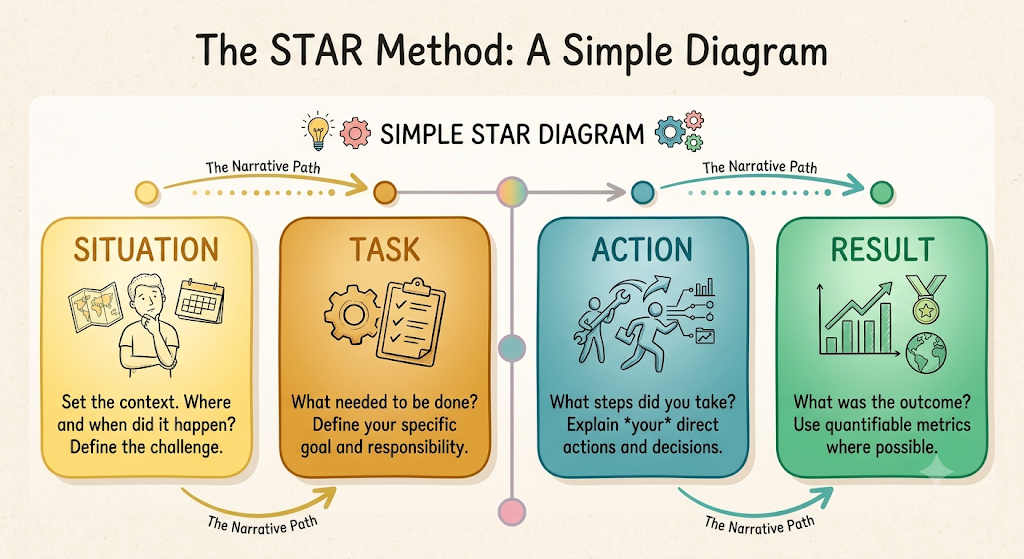
The STAR Method provides a simple framework:
- Situation – What was happening?
- Task – What was your responsibility?
- Action – What did you do?
- Result – What happened?
This approach keeps your answers logical, concise, and evidence-based.
Recruiter's Insight
"The strongest candidates don't simply claim they have leadership or problem-solving skills—they demonstrate those qualities through real stories supported by measurable outcomes."
Pro Tip
Prepare at least five STAR stories covering leadership, teamwork, conflict resolution, problem-solving, and achievement before every interview.
5. Anticipate Common Interview Questions
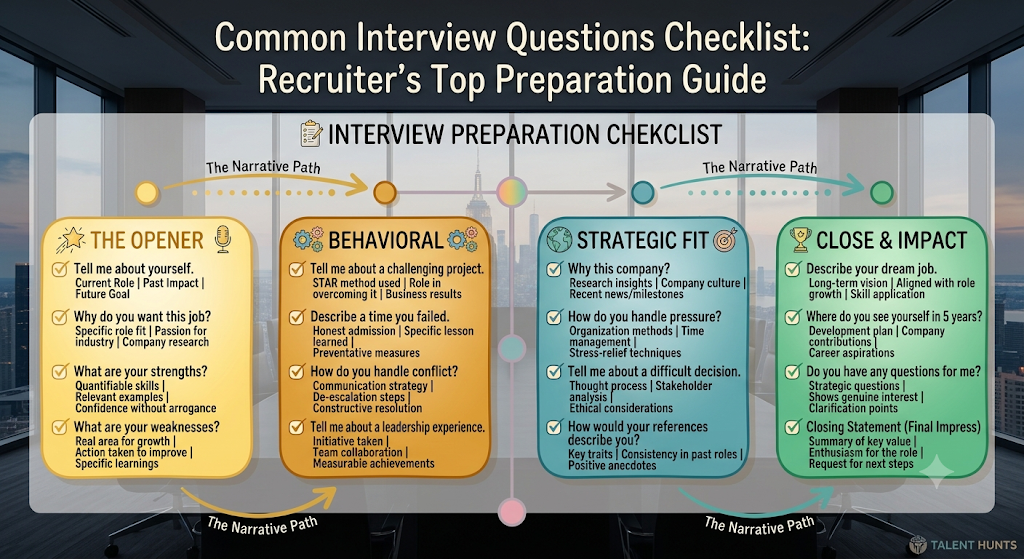
While every interview is unique, certain questions appear consistently across industries.
Examples include:
- Tell me about yourself.
- Why do you want to work here?
- What are your strengths?
- What are your weaknesses?
- Why are you leaving your current employer?
- Describe a difficult situation.
- Where do you see yourself in five years?
Preparation doesn't mean memorizing scripts. Instead, identify the key messages you want to communicate and practice delivering them naturally.
Recruiter's Insight
Over-rehearsed answers often sound robotic. Interviewers prefer authentic conversations supported by thoughtful preparation.
Pro Tip
Record yourself answering common questions and review whether your responses sound confident, clear, and conversational.
6. Prepare Questions for the Interviewer
Many candidates assume the interview ends when the interviewer asks:
"Do you have any questions for us?"
In reality, this is another opportunity to demonstrate curiosity, critical thinking, and genuine interest.
Thoughtful questions show you've considered how you'll contribute to the organization—not just what you'll gain from the role.
Examples include:
- What does success look like in the first six months?
- What are the biggest priorities for this role?
- How is performance typically measured?
- What qualities distinguish top performers in your team?
Avoid questions that could easily be answered by reading the company's website or job advertisement.
Recruiter's Insight
Candidates who ask insightful questions often leave a stronger final impression than those who simply say, "No, I think you've covered everything."
Pro Tip
Prepare five thoughtful questions in advance and choose the most relevant ones based on how the conversation develops.
7. Practice Your Answers Out Loud
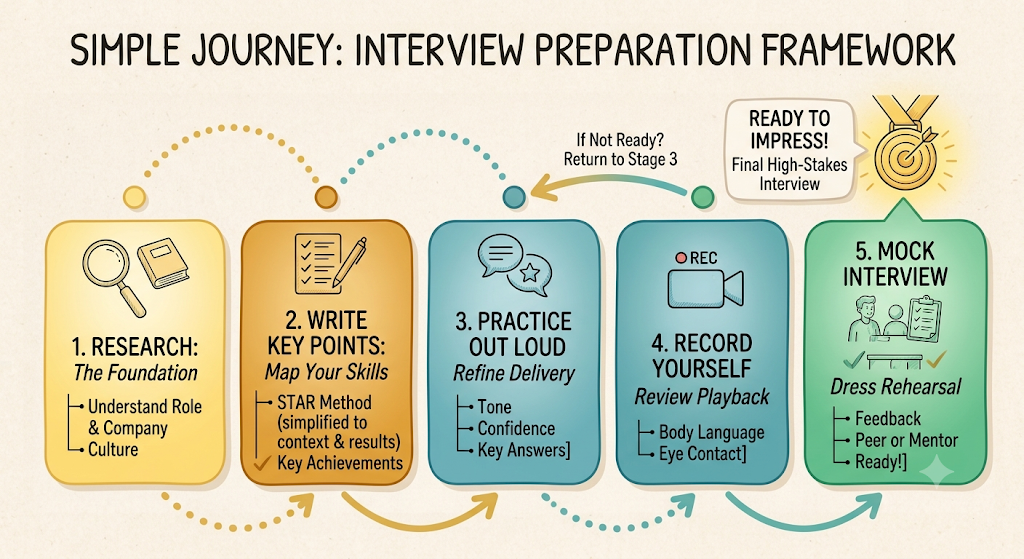
Many candidates prepare extensively by reading interview questions and mentally formulating answers. However, they overlook one critical step: speaking their answers aloud.
An answer that sounds polished in your mind can become disorganized once you begin speaking. You may find yourself using filler words, losing your train of thought, or struggling to explain complex experiences clearly.
Practicing aloud helps bridge the gap between knowing your experience and communicating it effectively. It allows you to refine your wording, improve your confidence, and identify areas where your explanations may be too vague or too lengthy.
The goal isn't to memorize scripts. Instead, you want to become comfortable discussing your experience naturally and professionally.
A useful approach is to simulate the interview environment. Ask a friend or mentor to conduct a mock interview, or record yourself answering common questions. Pay attention not only to what you say, but also to your tone, pace, body language, and eye contact.
Remember, interviews are conversations—not presentations.
Recruiter's Insight
At Talent Hunts Indonesia, we often notice that candidates who practice speaking aloud appear significantly more confident during interviews. They communicate their achievements more clearly, respond with greater structure, and adapt more easily to follow-up questions.
Confidence isn't something you're born with—it is built through repetition and preparation.
Pro Tip
Practice answering your top 10 interview questions aloud before every interview. Time your responses and aim to answer most questions within one to two minutes, unless the interviewer invites you to elaborate.
8. Support Your Answers with Achievements and Numbers
One of the biggest differences between average and outstanding candidates is their ability to support claims with measurable evidence.
Instead of simply saying:
"I improved the sales process."
Provide context and measurable impact:
"I redesigned our sales pipeline, reducing response time by 35% and increasing monthly conversions by 18% within six months."
Specific achievements make your experience more credible because they demonstrate not only what you did, but also the value you created.
Even if your role isn't directly tied to revenue, there are many ways to quantify success, such as:
- Projects completed
- Time saved
- Customer satisfaction
- Cost reductions
- Process improvements
- Team productivity
- Employee engagement
- Quality improvements
Whenever possible, combine qualitative explanations with quantitative results.
Recruiter's Insight
Interviewers remember stories supported by evidence. Numbers provide context, credibility, and scale. They help distinguish candidates who understand their business impact from those who simply describe daily responsibilities.
Pro Tip
Before your interview, identify five achievements that include measurable outcomes. Keep them ready to incorporate naturally into different interview questions.
Example
Instead of:
❌ "I managed a recruitment project."
Try:
✅ "I led a recruitment campaign that filled 28 positions within eight weeks while reducing time-to-hire by approximately 20%."
9. Dress Professionally for the Company and the Role
Your appearance forms part of your first impression long before you answer the first interview question.
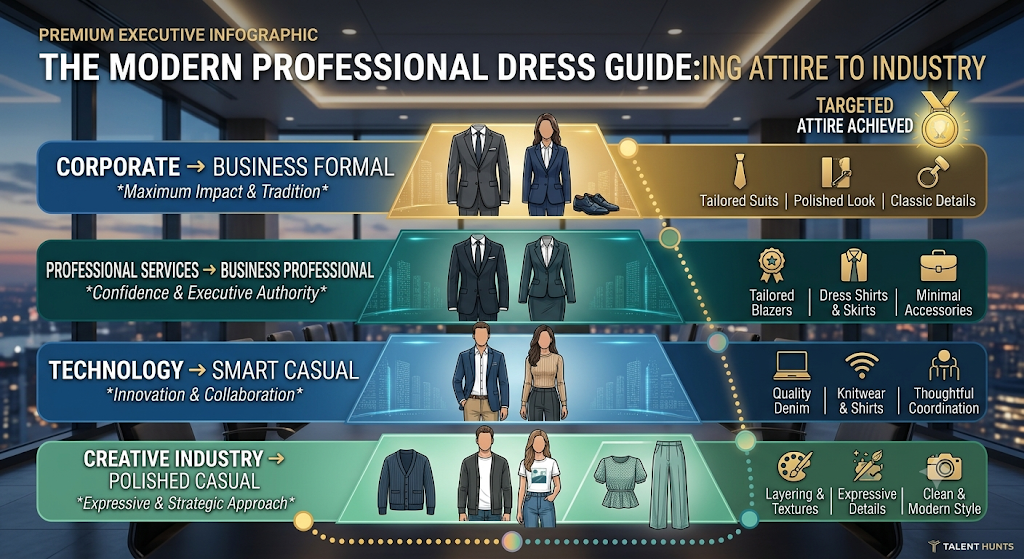
Professional attire communicates respect, attention to detail, and an understanding of workplace expectations. However, dressing professionally doesn't necessarily mean wearing the most formal clothing available—it means dressing appropriately for the company's culture and the position you're applying for.
For example:
- A multinational bank may expect formal business attire.
- A technology startup may embrace smart casual clothing.
- A creative agency might encourage more personal style while still expecting professionalism.
When in doubt, it's generally better to be slightly overdressed than underdressed.
Equally important are the details that candidates sometimes overlook:
- Clean, wrinkle-free clothing
- Polished shoes
- Well-groomed appearance
- Minimal distractions such as excessive accessories or strong fragrances
These small elements contribute to the impression that you're prepared and professional.
Recruiter's Insight
Your appearance won't get you hired on its own—but it can influence first impressions. Dressing appropriately signals that you respect both the opportunity and the people interviewing you.
Pro Tip
If you're unsure about the expected dress code, don't hesitate to ask the recruiter before the interview. Clarifying expectations demonstrates professionalism, not uncertainty.
10. Plan Your Interview Logistics in Advance
Even the best-prepared candidate can begin an interview feeling stressed if they arrive late, struggle to find the location, or experience technical issues.
Preparation isn't limited to interview questions—it also includes practical planning.
For an in-person interview:
- Confirm the office address.
- Estimate travel time, including traffic.
- Plan to arrive 10–15 minutes early.
- Bring extra copies of your resume.
- Carry a notebook and pen if appropriate.
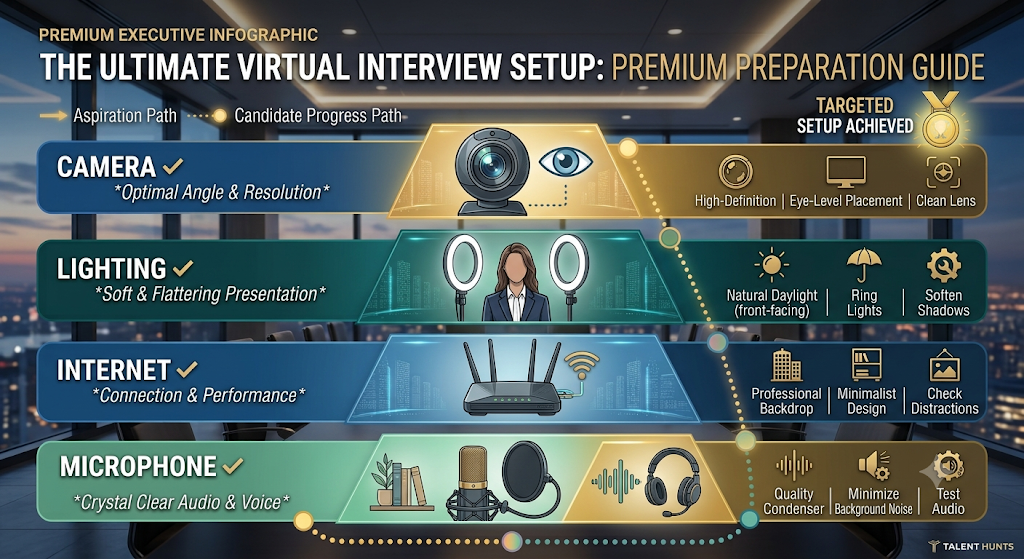
For virtual interviews:
- Test your internet connection.
- Check your camera and microphone.
- Close unnecessary applications.
- Prepare a quiet, professional environment.
- Join the meeting five minutes early.
Removing logistical uncertainties allows you to focus entirely on the conversation.
Recruiter's Insight
Punctuality demonstrates reliability. Arriving calmly and prepared creates a positive first impression before the interview even begins.
Pro Tip
Treat interview logistics like an important client meeting. Preparation reflects professionalism.
11. Demonstrate Positive Body Language and Communication
Communication extends far beyond the words you speak.
Interviewers also evaluate how you present yourself through body language, tone of voice, and active listening.
Positive body language includes:
- Maintaining appropriate eye contact
- Smiling naturally
- Sitting with good posture
- Speaking clearly and at a moderate pace
- Listening without interrupting
- Using open, relaxed gestures
Conversely, behaviors such as avoiding eye contact, crossing your arms throughout the interview, checking your phone, or fidgeting excessively can unintentionally communicate nervousness or disengagement.
Body language should reinforce your message—not contradict it.
Recruiter's Insight
Many candidates underestimate how much communication is non-verbal. Confidence isn't just heard—it's seen through posture, eye contact, and the way candidates engage throughout the conversation.
Pro Tip
Record yourself during a mock interview. Review your posture, gestures, facial expressions, and speaking pace as objectively as possible.
12. Prepare for Virtual Interviews Professionally
Virtual interviews have become a standard part of the recruitment process, especially for regional, remote, and international positions.
Although the format has changed, employers continue to assess professionalism with the same level of scrutiny.
Ensure your interview environment supports a productive conversation:
- Use a quiet location.
- Position your camera at eye level.
- Maintain good lighting.
- Choose a clean, distraction-free background.
- Silence notifications.
- Look into the camera rather than constantly at your own image.
Technical preparation is just as important as interview preparation.
Recruiter's Insight
Technical issues happen. Employers understand that. What they evaluate is how calmly and professionally you respond when something unexpected occurs.
Pro Tip
Join the meeting platform at least 10 minutes early to confirm your audio, camera, and internet connection.
13. Be Ready to Discuss Salary Expectations Professionally
Salary conversations can feel uncomfortable, but avoiding them altogether isn't the answer. Employers often ask about salary expectations to understand whether both parties are aligned before moving forward in the hiring process.
Preparation begins with research. Before your interview, understand the typical salary range for similar roles based on your experience, industry, and location. This helps you provide a realistic expectation rather than an arbitrary number.
When discussing compensation, avoid focusing solely on salary. Consider the overall package, including bonuses, benefits, learning opportunities, flexibility, and career progression.
If asked early in the process, a balanced response might be:
"I'm primarily focused on finding a role where I can contribute and continue growing. Based on my experience and market research, I'm looking for a package that reflects the responsibilities of the role, but I'm open to discussing the overall compensation structure."
This approach communicates confidence while remaining flexible.
Recruiter's Insight
Candidates who approach salary discussions professionally demonstrate business maturity. The goal isn't to "win" the negotiation—it's to find a fair agreement that reflects the value both parties bring to the relationship.
Pro Tip
Research the market before every interview and define three numbers for yourself:
- Your ideal salary.
- A realistic target range.
- The minimum package you would genuinely accept.
14. Follow Up Professionally After the Interview
Your interview doesn't end when you leave the meeting room or click "Leave Meeting."
Following up with a brief thank-you email demonstrates professionalism, appreciation, and continued interest in the opportunity.
A simple message sent within 24 hours can reinforce the positive impression you've already made.
Your email should:
- Thank the interviewer for their time.
- Mention one or two points from the discussion.
- Reaffirm your interest in the role.
- Offer to provide any additional information if needed.
Keep the tone sincere and concise. The purpose is to strengthen the relationship—not to pressure the employer for an immediate decision.
Recruiter's Insight
Not every hiring manager expects a follow-up email, but those who receive a thoughtful one often remember the candidate more positively. It's a small gesture that reflects professionalism and attention to detail.
Pro Tip
Draft your thank-you email before the interview. After the meeting, personalize it with specific details from the conversation and send it within one business day.
15. Conduct a Final Interview Readiness Check
The hours leading up to your interview should be focused on reinforcing your preparation—not cramming new information.
A final readiness check helps ensure you've covered every important detail and can enter the interview feeling calm and confident.
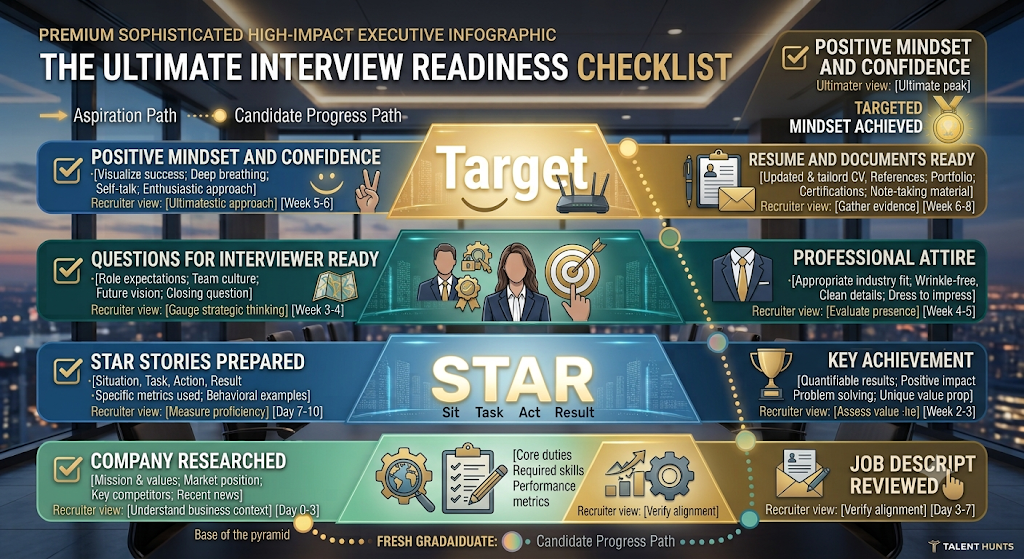
Before leaving home or joining the meeting, ask yourself:
- Have I researched the company?
- Do I understand the role?
- Have I prepared examples using the STAR method?
- Do I know my key achievements?
- Is my attire appropriate?
- Are my documents ready?
- Have I planned my travel or tested my technology?
- Do I have thoughtful questions prepared for the interviewer?
If you can answer "yes" to each of these questions, you've given yourself the best possible foundation for success.
Remember, interviews are not about delivering perfect answers. They are about demonstrating who you are, how you think, and the value you can bring to an organization.
Recruiter's Insight
After interviewing thousands of professionals, we've learned that successful candidates aren't perfect—they're prepared. Preparation allows your experience, personality, and potential to come through naturally, helping interviewers see not just what you've done, but what you're capable of achieving next.
Pro Tip
The night before your interview, review your checklist one final time, then get adequate rest. A clear, focused mind is one of the most valuable assets you can bring into any interview.

Gedung Treasury Tower 1, Lt.7 Unit F. Jl. Jend. Sudirman Kav 52-53 Kebayoran Baru Jakarta Selatan Telephone (021) 50208136